Quick answer: If your business needs equipment, buying it and placing it in service by December 31, 2026 may let you deduct the full cost on your 2026 return. 100% bonus depreciation is back for property acquired after January 19, 2025, and the Section 179 limit for 2026 is $2,560,000, according to the IRS. A deduction lowers your tax on the cost; it does not make the equipment free, so buy only what the business needs. Every fall, business owners ask us the same question: "Should I buy that truck, computer, or machine before the year ends?" Sometimes the answer is yes. Other times, rushing a purchase costs more than it saves. This guide explains how equipment write-offs work, what changed for 2026, and how to decide whether a year-end purchase makes sense. How equipment write-offs workWhat is depreciation?When you buy something your business will use for years, like a truck, a machine, or computers, the tax rules normally spread the deduction over several years. That spreading-out is called depreciation. A machine classed as 7-year property, for example, is normally deducted a piece at a time over eight tax years. Two rules let you deduct much or all of the cost in the first year instead:
How do Section 179 and bonus depreciation compare?Both can write off equipment in the first year, but they have different limits.
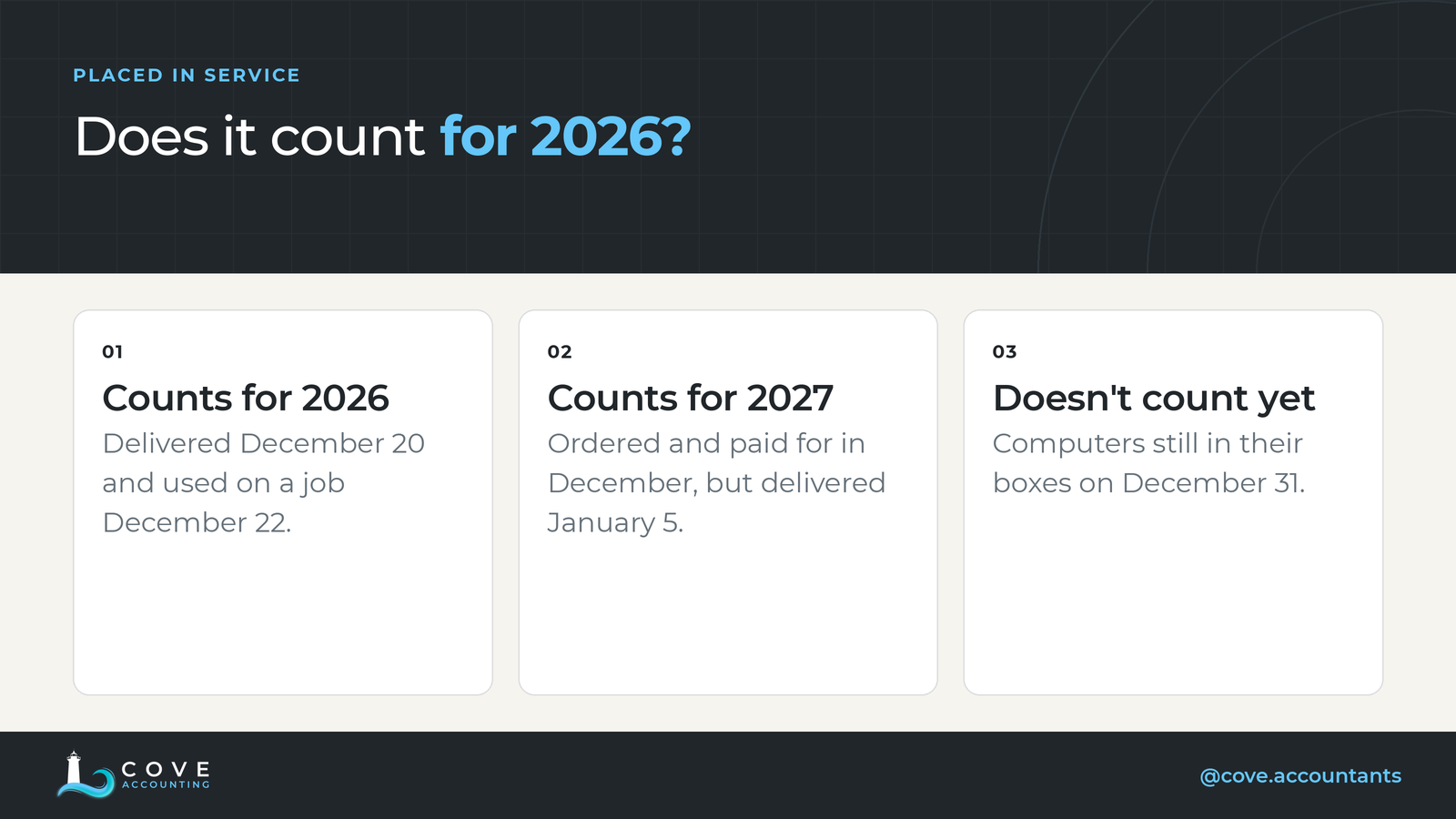
In practice: many businesses use both. We can help you combine them so the deduction lands in the year it does the most good. Does buying it by December 31 count?What does "placed in service" mean?Buying is not enough on its own. To deduct equipment on your 2026 return, it must be placed in service by December 31, 2026, meaning delivered, set up, and ready to use in your business. Ordering it, or even paying for it, does not count.
Tip: Dealers and shipping get busy at year-end. If you're planning a purchase, order it in November so it arrives and gets set up in time.
What kinds of purchases qualify?Which business purchases can I write off?Most tangible property a business buys to use for more than a year can qualify.
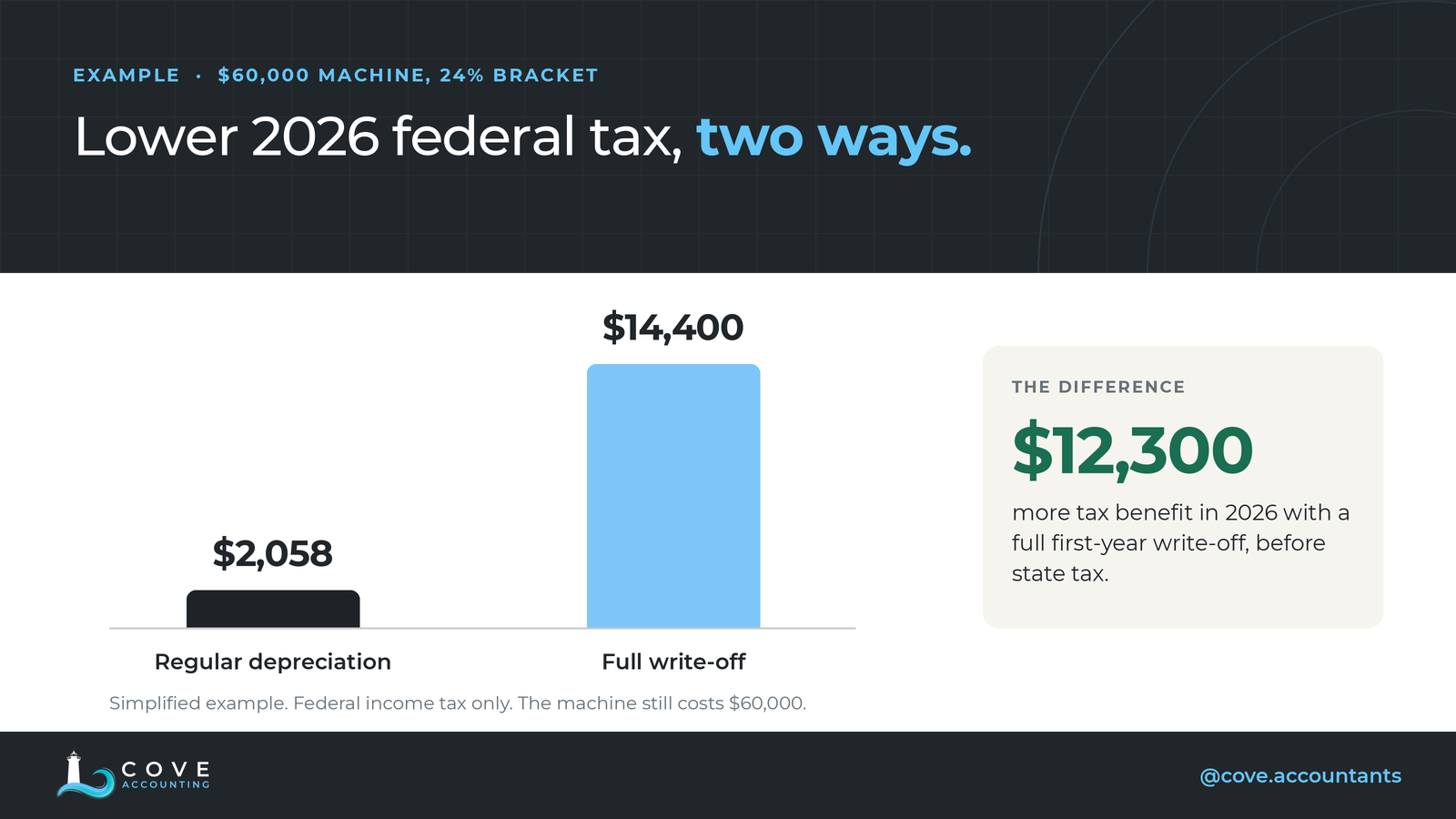
Small purchases: Businesses without audited financial statements can generally elect the de minimis safe harbor and expense items costing $2,500 or less per invoice or item, with no depreciation tracking. An example with a $60,000 machineHow much could a full write-off change this year's tax?Say a business owner in the 24% federal tax bracket buys a $60,000 machine (7-year property) and has it running by December 15, 2026.
That is about $12,300 more tax benefit in 2026, kept in the business now instead of spread over the coming years. But you still spent $60,000. After the 2026 tax effect, the machine costs about $45,600, not zero. This example is simplified and counts federal income tax only; state tax and your actual bracket change the numbers.
When to think twiceWhen is a year-end equipment purchase not a good idea?A big write-off isn't always the best move. Slow down if any of these apply:
Your before-December checklistWhat should I do before buying equipment this year?
Frequently asked questionsWhat is the Section 179 limit for 2026?+The Section 179 limit for 2026 is $2,560,000. It is reduced dollar for dollar once a business places more than $4,090,000 of qualifying property in service during the year. Is bonus depreciation 100% in 2026?+Yes, for qualifying property acquired after January 19, 2025 and placed in service in 2026, according to the IRS. Do I have to pay for equipment by December 31 to deduct it?+The key test is whether it is placed in service, meaning delivered, set up, and ready to use, by December 31. Equipment that is paid for but not yet in use counts in the year it is put to work. Can I deduct equipment I bought with a loan?+Generally, yes. Financed equipment can usually be deducted in the year it is placed in service, even while you are still making payments. Can I write off a vehicle?+Often, yes, for the business-use portion. For 2026, Section 179 on SUVs is capped at $32,000, and passenger cars have a first-year depreciation cap of $20,300 with bonus depreciation. Can I deduct used equipment?+Often, yes. Used property can qualify for bonus depreciation if your business never used it before and did not buy it from a related party. Plan the purchase before you make itA short conversation before you buy can show how much a write-off is worth this year and whether this year or next is the better time. Cove Accounting helps business owners plan major purchases and year-end tax moves. Sources
|

Year-End Equipment Purchases: 2026 Section 179 and Bonus Depreciation